avito premium
company
avito
industry
classified
date
2023-2025
Historically, Avito has effectively met user needs in the low- and mid-price segments. At the same time, the global luxury resale market has been growing rapidly: users are increasingly purchasing premium items on the secondary market for the sake of savings, sustainable consumption, and access to rare items. Yet this segment was virtually nonexistent on our platform.



The main barrier to the development of the premium segment on the C2C platform was mistrust. In high-end categories, there is a high risk of counterfeits, and without a scalable trust mechanism, users are unwilling to purchase such items, which negatively impacts liquidity and slows transaction growth.
task
My task was to design the “Avito Premium” section within the Fashion category and develop the criteria for listing products in this section.


strategy & hypothesis
We formulated two key hypotheses:
If we implement product authentication, it will lower the barrier of mistrust and increase conversion rates
If we highlight premium products in a separate section, their visibility will increase relative to the overall search results
The project seemed expensive and risky, so we broke it down into two phases: first, we would launch the authenticity verification system and validate demand, and once we reached critical mass, we would launch a separate “Avito Premium” section

authentication design
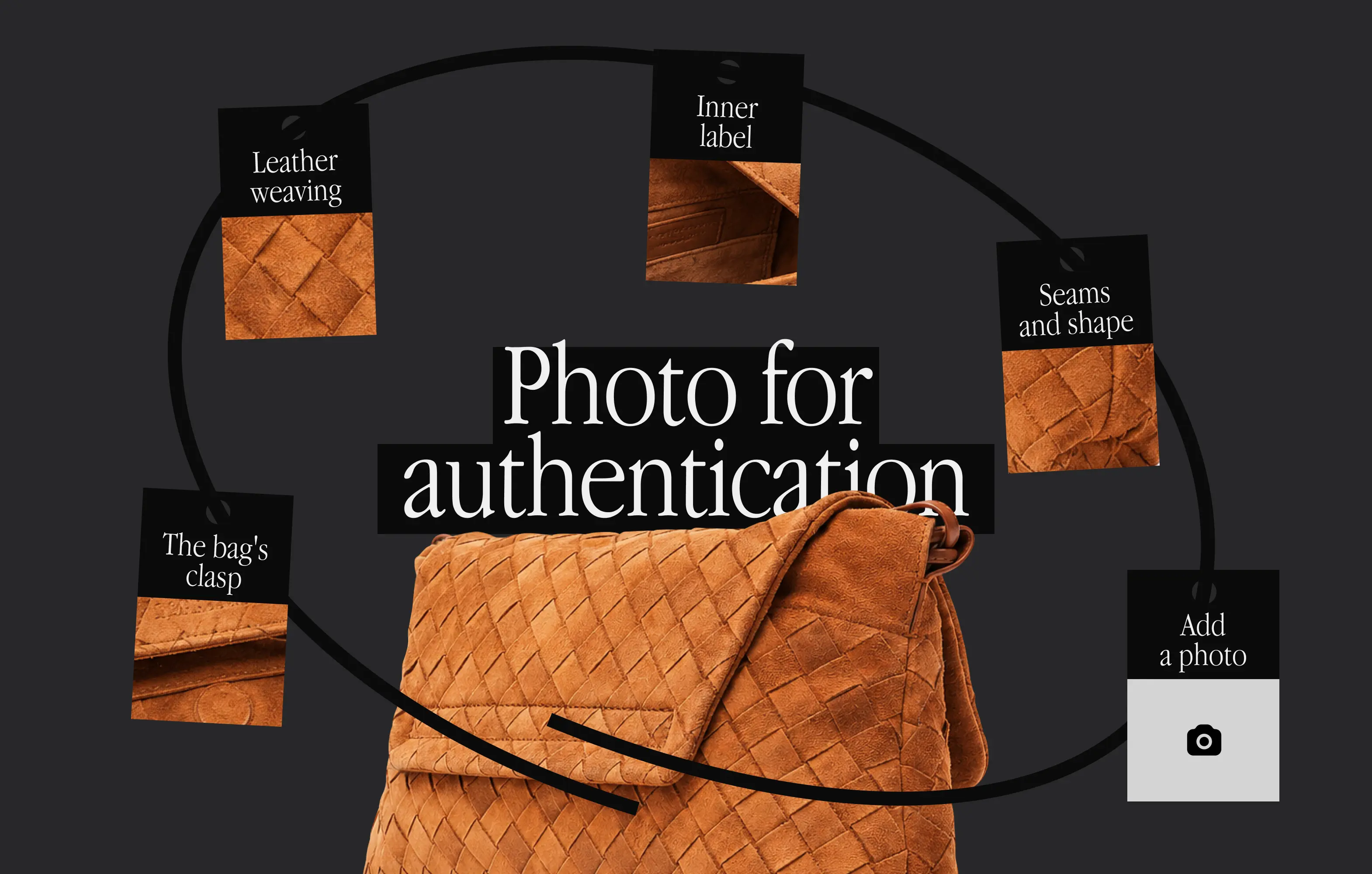
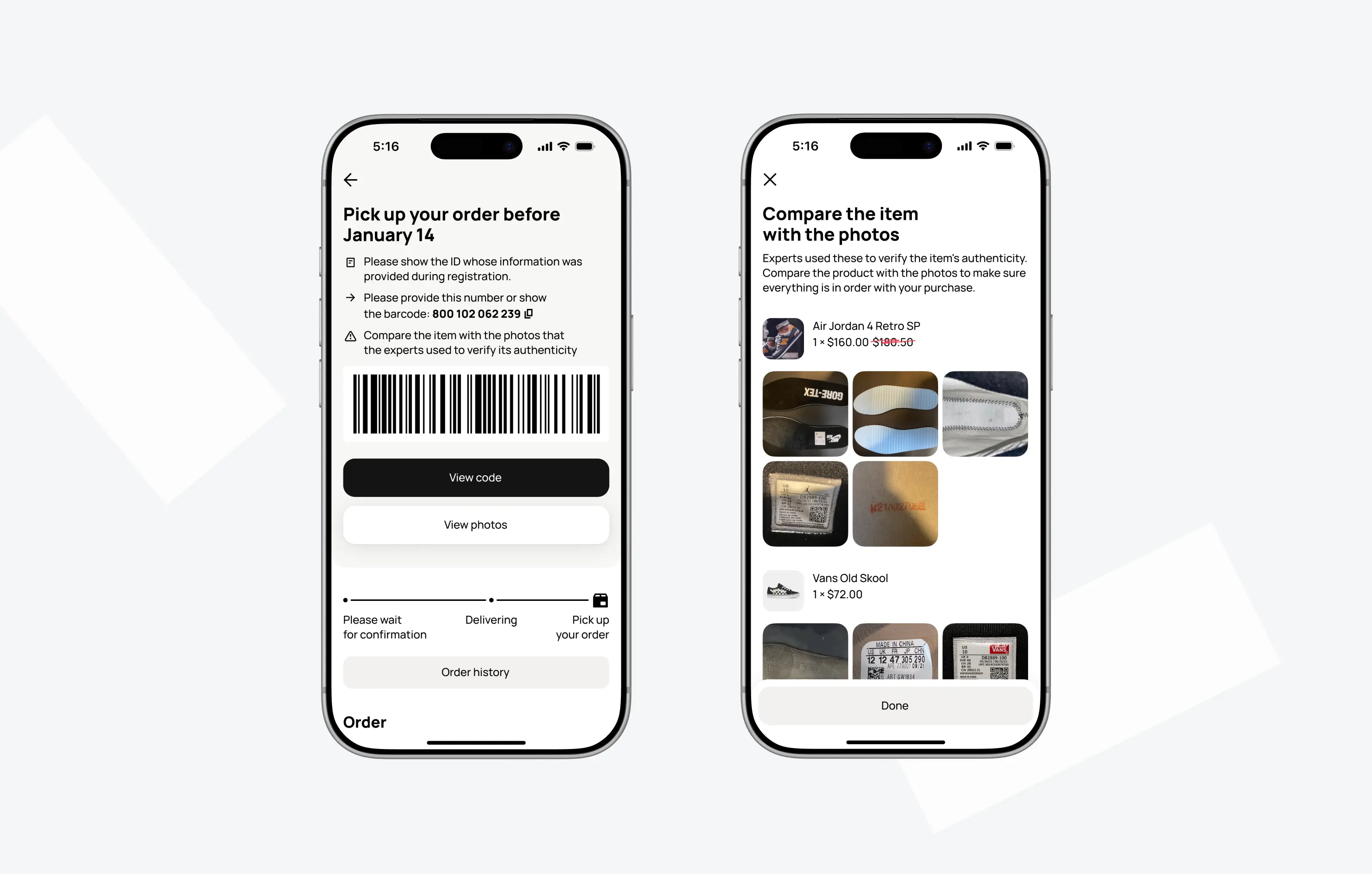
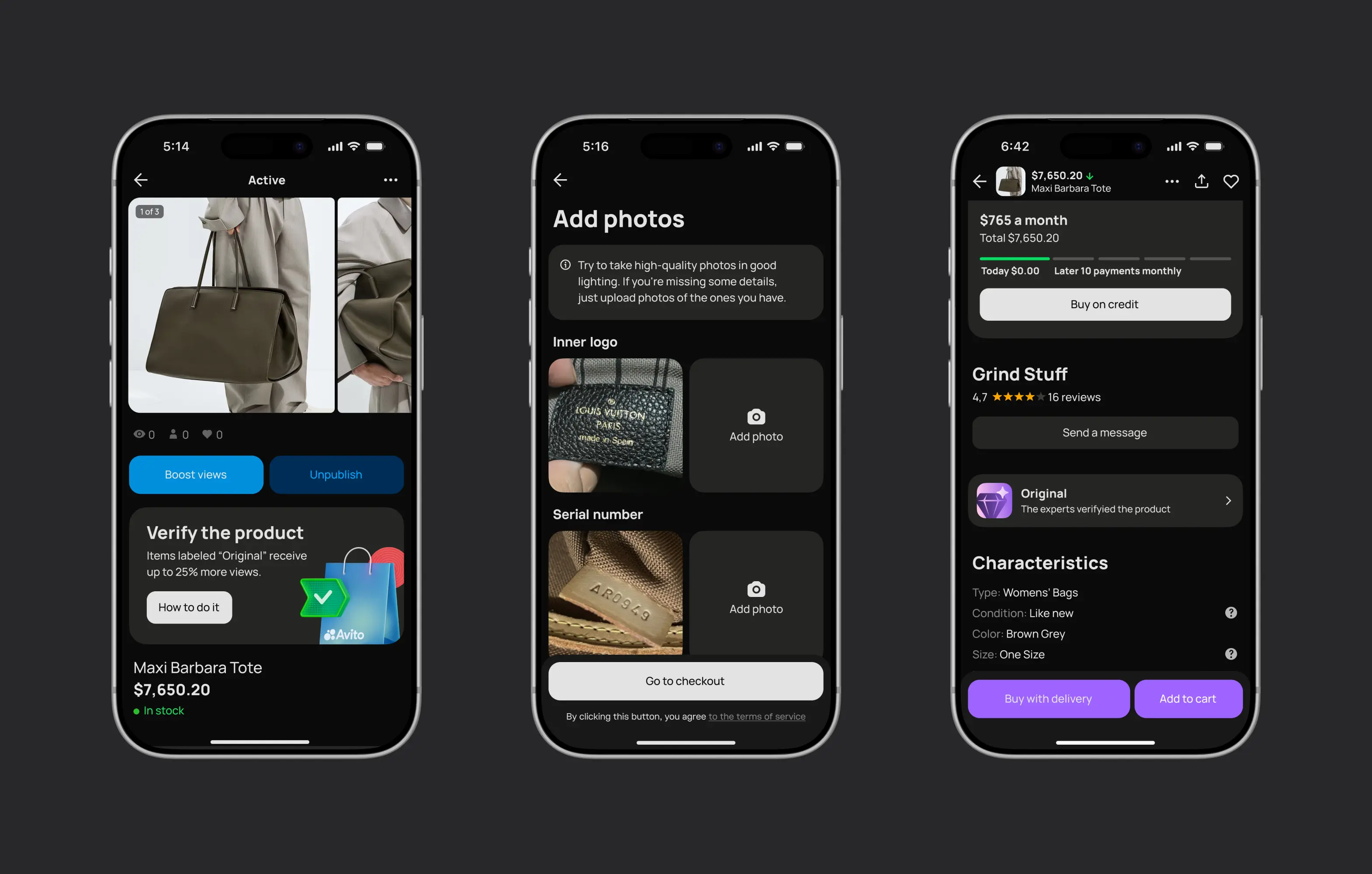
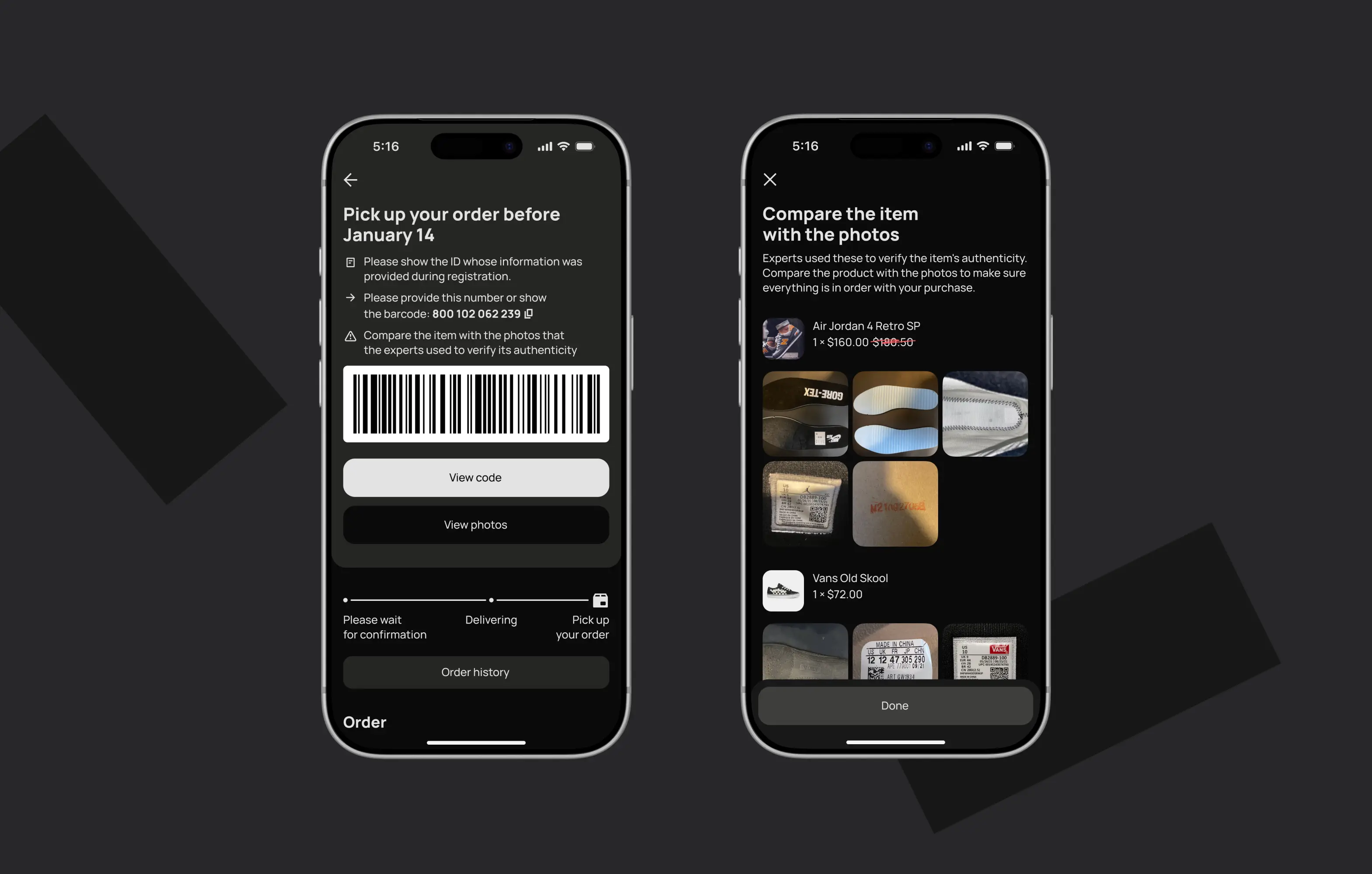
I designed the authentication workflow in collaboration with our partner Legit Grails and outlined exactly how the verification process would work and how the results would be presented to the user. To verify an item, the user had to submit several high-quality photos of the item, such as images of labels, seams, shoe insoles, zippers, and rivets. Our partners manually inspected the item and determined whether it was authentic.
After the initial user testing, I adjusted the scope and created a more realistic MLP.
I conducted interviews to verify whether users understood the value of the service, and then refined the final mockups based on those insights.

delivery and test launch
It was critical for partners to receive a complete set of high-quality photos, so the main UX challenge was to provide clear instructions and address edge cases (poor lighting, incorrect angles, low-quality photos, or missing key photos). As a result, the development team identified new error conditions during the process.
We ran an A/B test and saw a statistically significant result: items with the “Original” badge received 40% more views than items without the badge.
We also observed that users actively engaged with the scenario during the free trial, but when a partial fee was introduced, the number of such users dropped significantly — this became a key factor in our strategy for further development.


design of the “avito premium” section
After rolling out the authenticity verification system to all users and reaching coverage of over 40k+ original items, we began designing a separate “Avito Premium” section.
I sketched several visual concepts, drawing inspiration from luxury brands and fashion media, coordinated the style with stakeholders, and launched a series of unmoderated studies to test the interface’s readability.
Based on the test results, I made adjustments (based on heatmaps and user understanding of elements), finalized the corner cases, and handed the final mockups over to development.
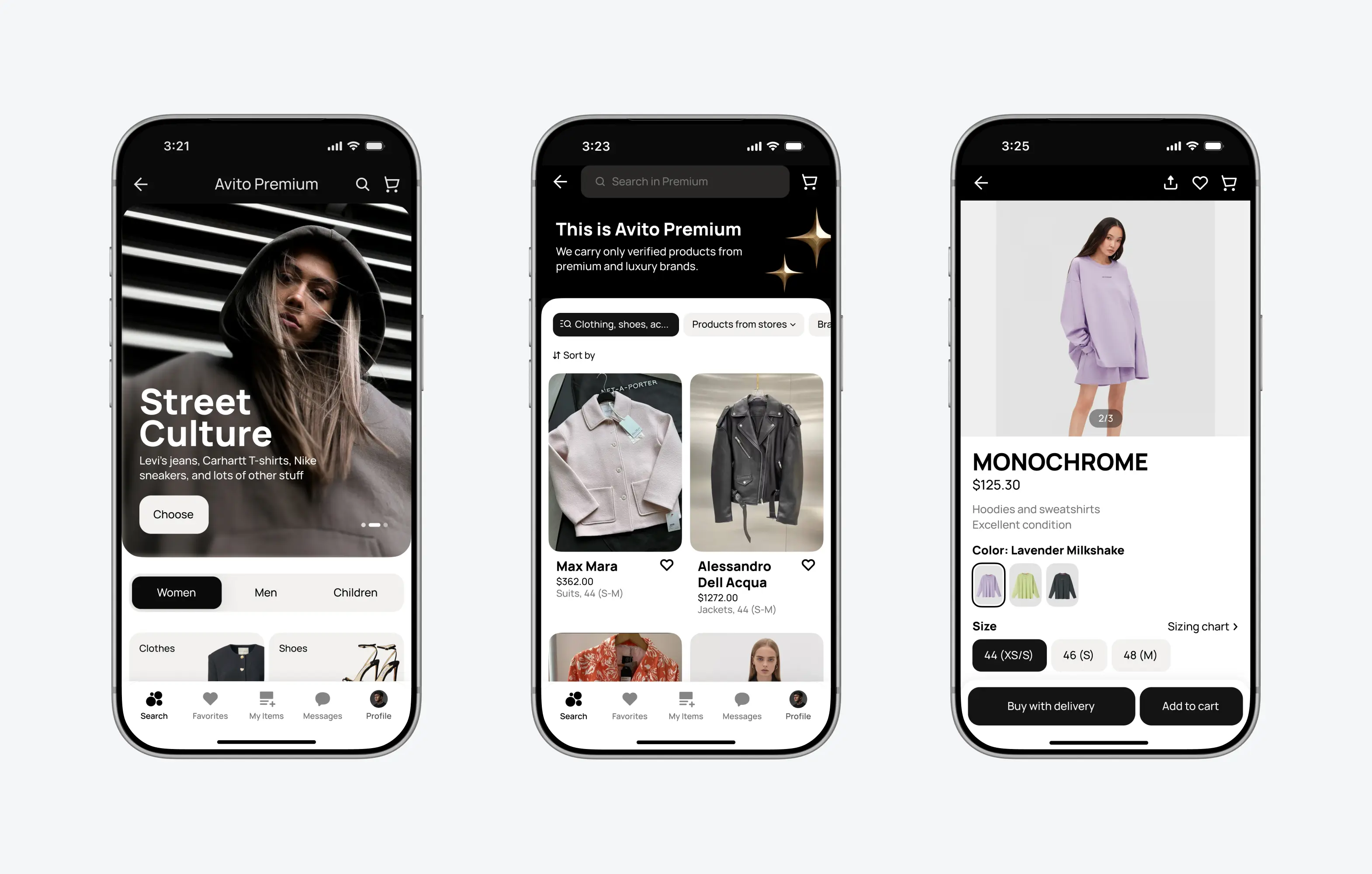


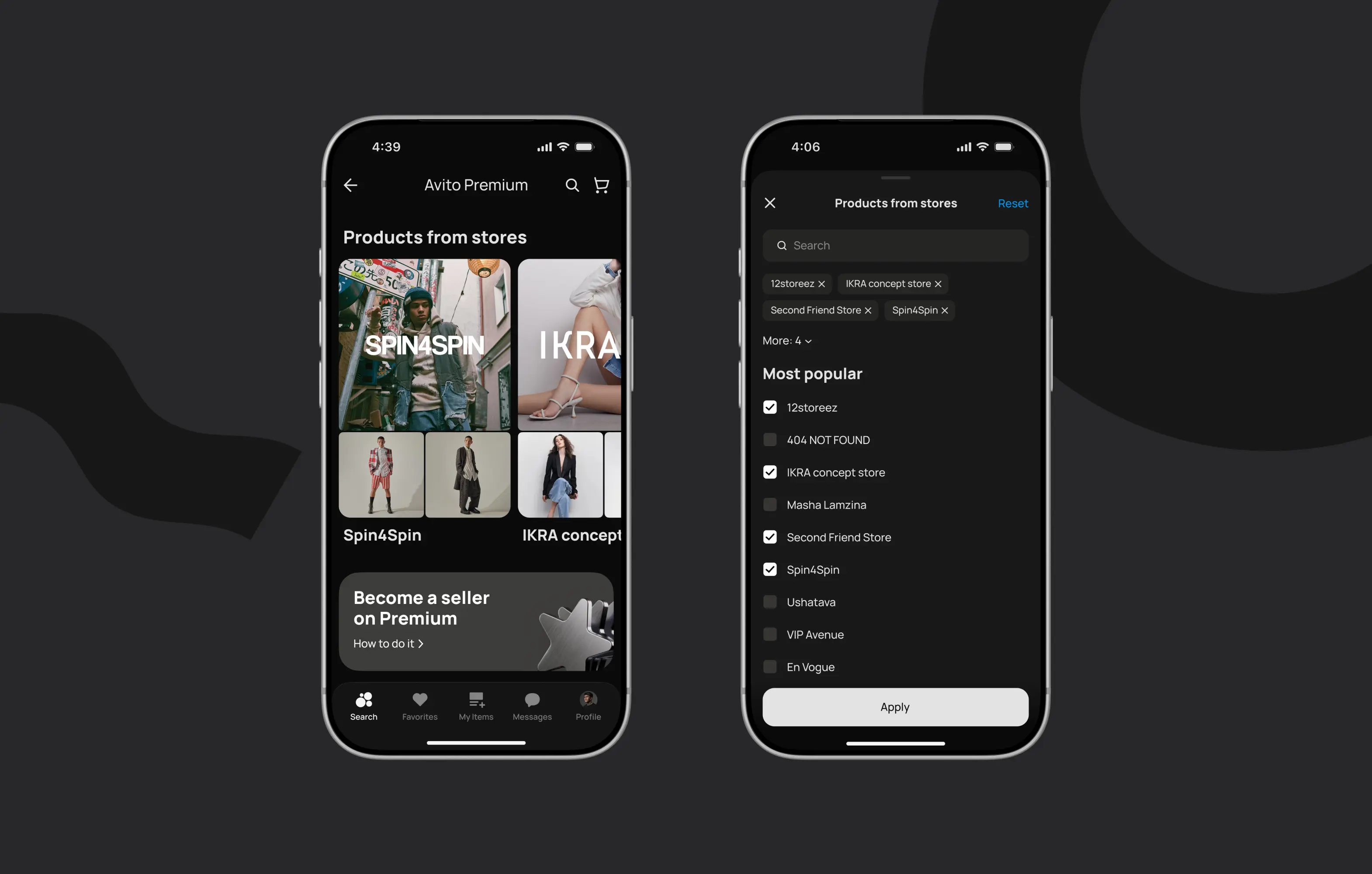
delivery and test launch
We built the section using BDUI based on components from the design system, and in some cases created custom elements to make it stand out visually from the other sections.
We launched a regional test to avoid network effects. It showed that the conversion rate to purchase is higher when users land on a product card from the Premium homepage. We later used this insight to inform our traffic acquisition strategy.
After the rollout, we continued to gradually improve navigation and develop new widgets. We launched each change as a separate A/B test and evaluated its impact on key metrics.
result
After launch, we expanded our product range and drove external traffic through marketing:
we reached 120k+ products in the section
small resale shops began actively joining the section, which further increased the number of unique users and the volume of transactions
After about two years, the project became self-sustaining. Currently, authenticity verification is a paid service for sellers $5.50 per check. The number of items has decreased, but the section continues to operate as a stable product.
more projects

© Khlestkin 2026. All rights reserved